The live workshop starts in →
Live on Zoom · [DATE] at [TIME] Eastern
--Days
--Hrs
--Min
--Sec
Live 3-hour, hands-on workshop on Zoom with LA Phil-commissioned composer Saad Haddad

Seed to Stage™

Your first premiere, or your first in years.

Your piece is finished and the players are out there, so why is nobody playing it?

You know a violist from college, a pianist from church, and a conductor you met once after a concert. Your score is still sitting in a folder on your computer.

Or you did send it. You wrote a long, careful email to an ensemble you admire, attached the PDF and the MIDI, and never heard back.

How do you get a real musician to say yes to your music?

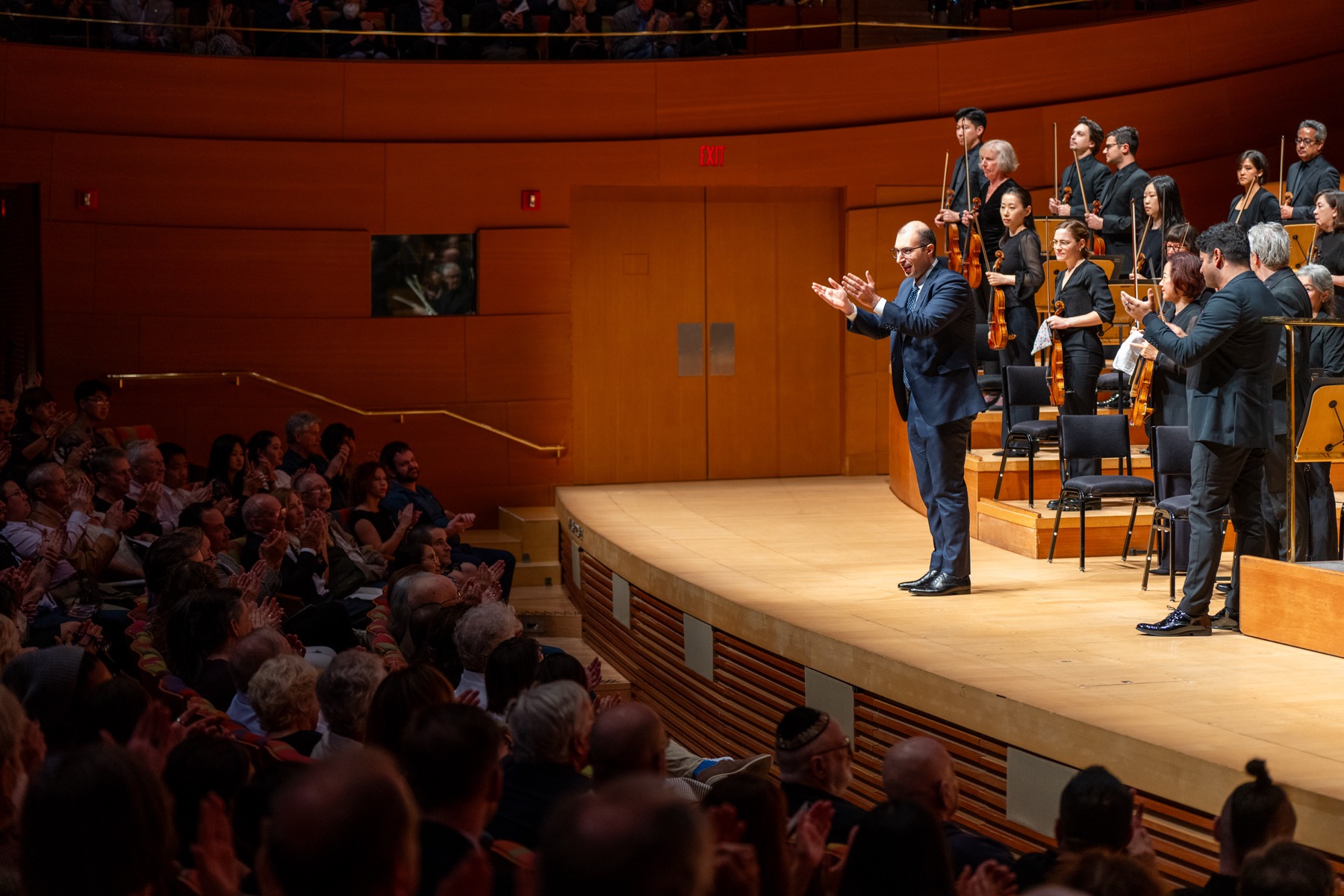
Saad Haddad on stage with the Los Angeles Philharmonic after a performance of his music

In this live, three-hour workshop, I'll show you how I plant seeds with performers, and how composers who study with me have turned a few short messages into premieres and commissions.

A seed is anything small that can grow into a performance: a short message to a player you know, a coffee with a conductor, or a short piece written for one musician. Some seeds get an answer within hours, some take months and a few take years, which is why I never wait on any single one of them.

You'll learn who to plant your first seeds with, what to say in that first message, how to follow up when nobody answers, and what to send so a player can say yes without a second thought. And before the workshop ends, you'll fix one of your own emails with me and send it to a real musician.

There is not one opportunity that will make or break what you do as a composer. Our work is about planting seeds in many places.

Saad Haddad
Sunday, [DATE] · [TIME] Eastern
Live on Zoom · 3 hours · $97 USD
Save my seat

Lifetime recording included. 7-day refund.

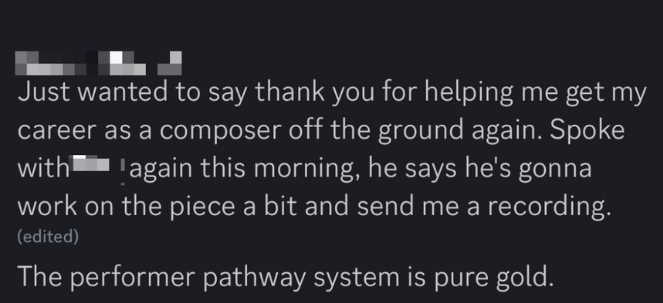
Discord message: thank you for helping me get my career as a composer off the ground again; the performer pathway system is pure gold
A composer getting their career off the ground again: “The performer pathway system is pure gold.”

Why listen to me

200+
performances of my music
21
professional orchestras have played my work
100+
composers I've helped get performed more reliably
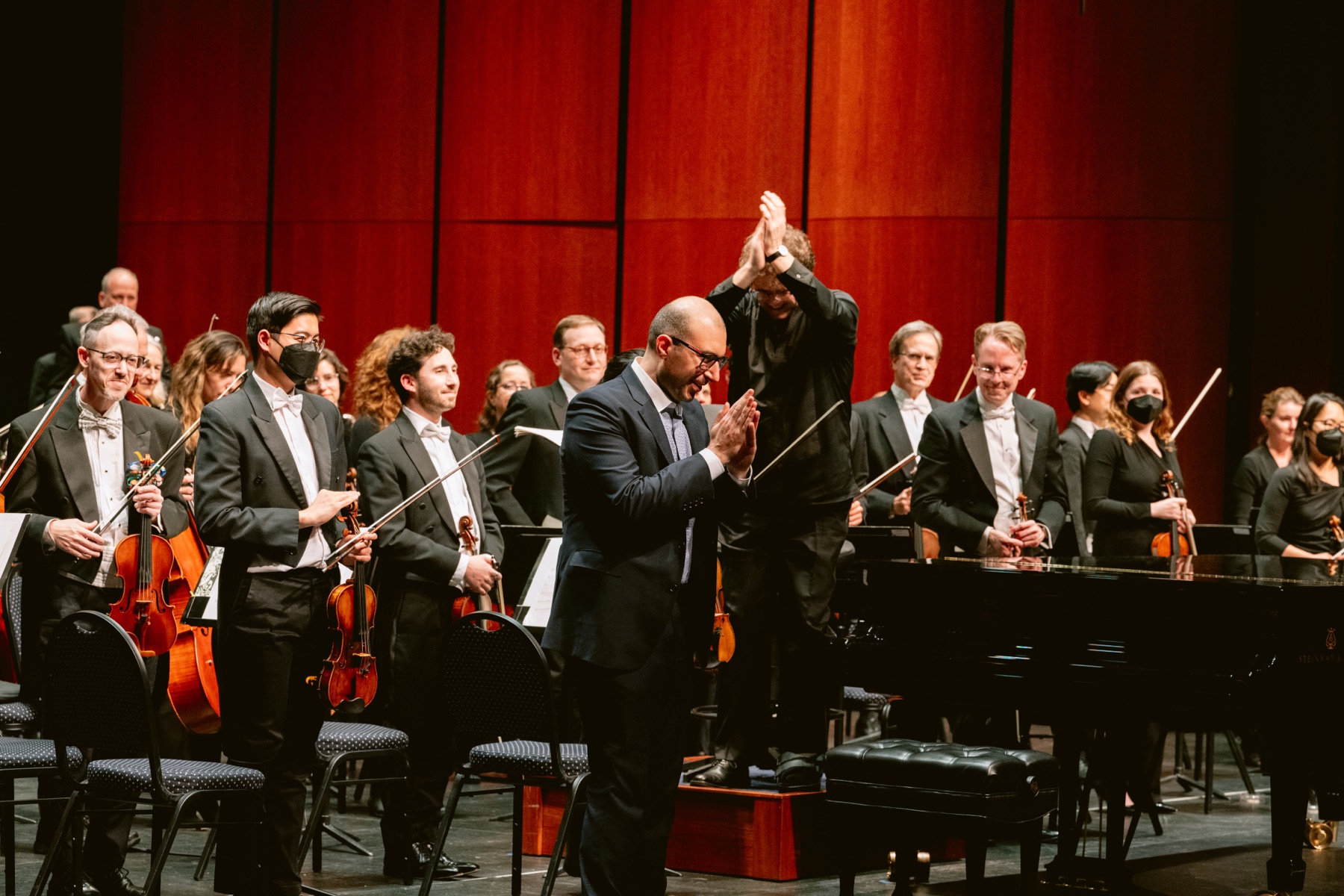
Saad Haddad applauding the California Symphony on stage after a performance of his music
Taking a bow with the California Symphony.

What grows when composers start planting seeds

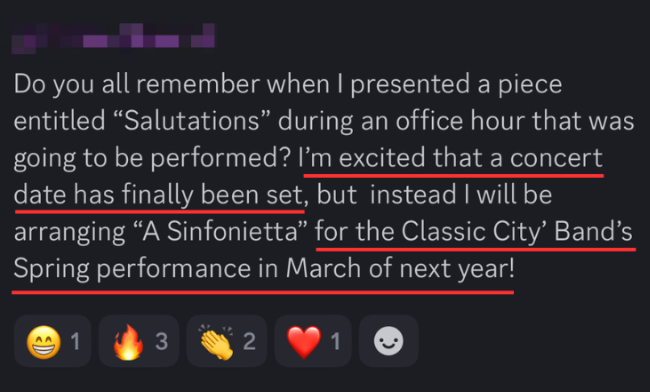
Discord message: a concert date has been set, and an arrangement for a community band's spring performance
Grace: a concert date is set, plus a new arrangement for a community band’s spring concert.
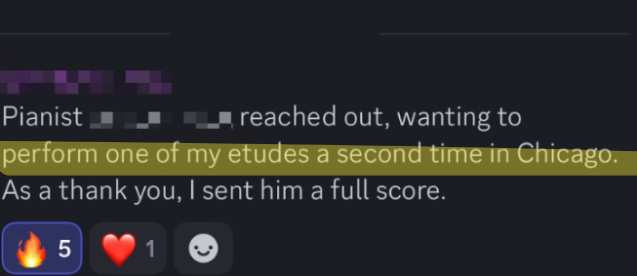
Discord message: a pianist reached out wanting to perform an etude a second time
Kevin: a pianist came back to perform Kevin’s etude a second time.
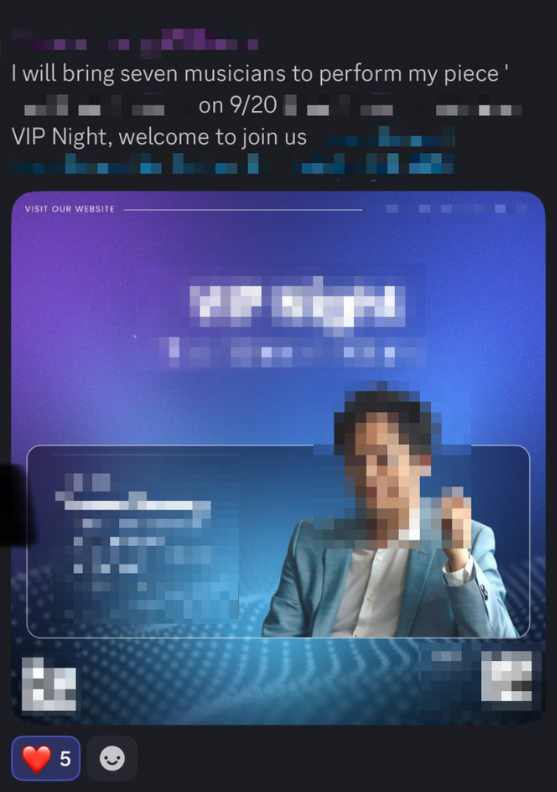
Discord message: bringing seven musicians to perform a new piece at a VIP night
Owens: seven musicians lined up to perform a new piece at a VIP night.
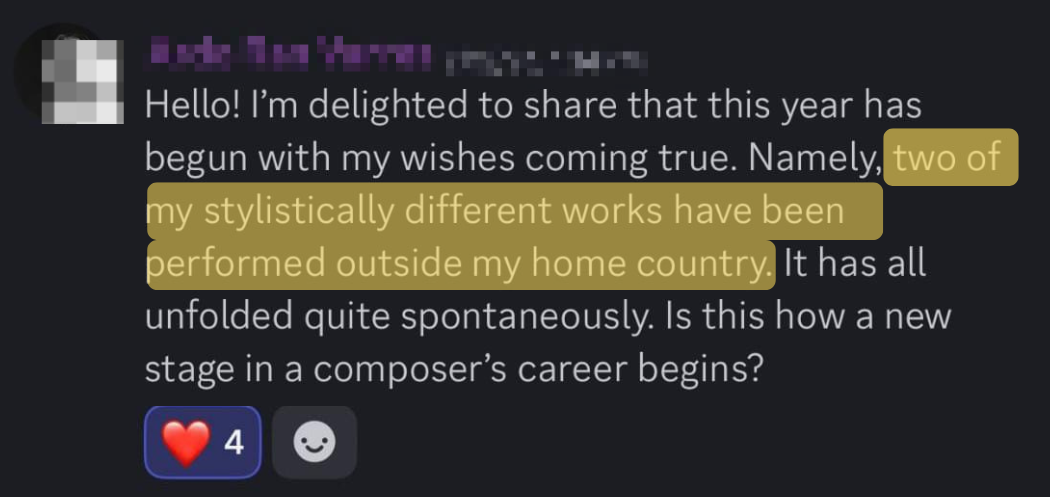
Discord message: two stylistically different works performed outside my home country
Ardo: two very different pieces performed abroad at the start of the year.

Sound familiar?

The music is ready. The ask is the hard part.

You know a few players, but asking them to learn your piece feels like a favor you have no right to ask.

You haven't talked to some of them in years, and reaching out now with a score attached would feel awkward.

You sent your music to an ensemble you admire and nobody answered, so now you don't know whether to follow up or give up.

Or you've been waiting on one big yes: the contest win, the call for scores, or the ensemble you admire most.

And you aren't even sure what to send: the full score, the parts, a MIDI mockup, a bio, or all of it at once.

Here's what composers told me on calls before they started working with me:

“I just haven't had the confidence to put myself out there and say, hey, I composed this music. Do you want to try and play it?”
“I'm not sure, like, where is, like, square one necessarily with how you make these connections?”
“Upsetting to be writing all this music and not having it performed.”

You already know your music deserves to be heard. What's missing is a simple, repeatable way to plant seeds with the musicians around you, and that's exactly what we're going to work on.

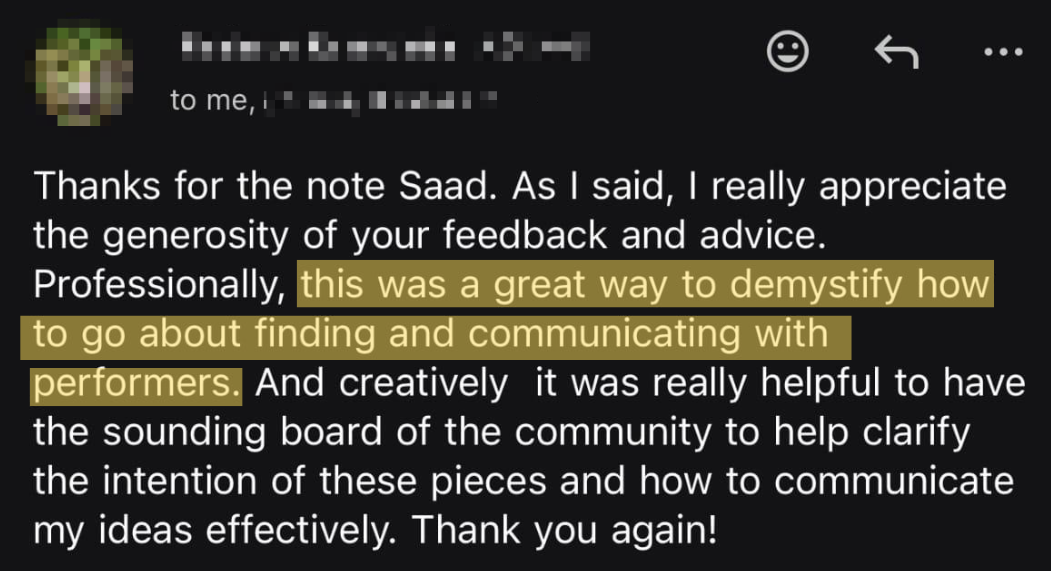
Email to Saad: this was a great way to demystify how to go about finding and communicating with performers
From a composer’s note after working with me.

You don't need connections you don't have

No publisher, no manager, no famous teacher making calls for you

Some composers have a conservatory network, a publisher or a teacher who passes their scores along. Most of us don't.

I studied composition for 10 years, spent $200,000 on my training and earned my master's degree from Juilliard, and nobody taught me how to get my music performed.

I won some contests, but they usually led to one performance after months of waiting. So I started going straight to the musicians, and my music has now been performed more than 200 times.

The composers I work with have gotten premieres and commissions from people they already knew: a pianist from church, a director they'd lost touch with, a conductor they once played for. The difference was that they started planting seeds, and kept planting them.

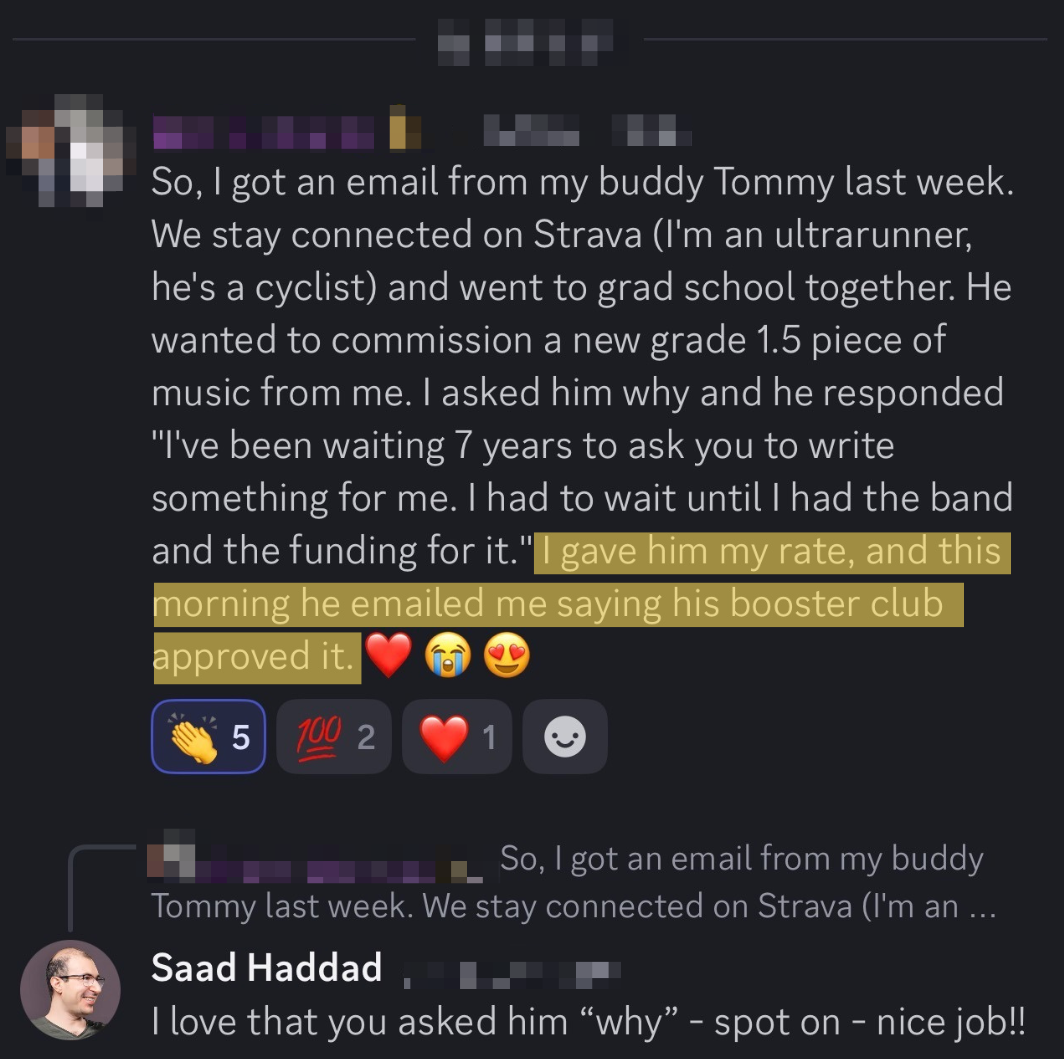
Discord message: a grad school friend who had waited seven years to ask commissioned a new piece, and his booster club approved the fee
Ben: a grad school friend from Strava had waited seven years to ask Ben for a piece.
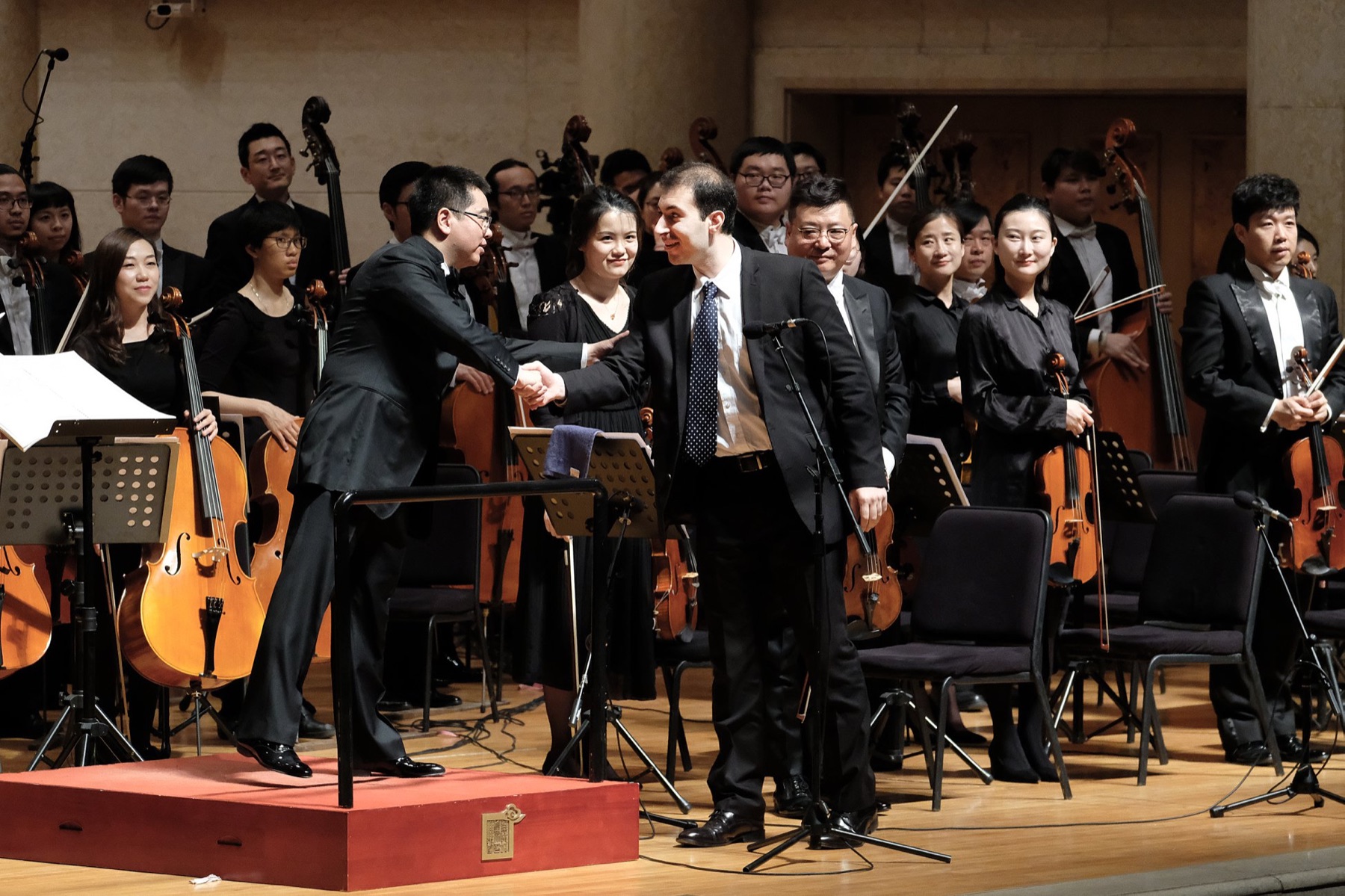
Saad Haddad shaking hands with the conductor on stage with the Hangzhou Philharmonic after a performance of his piece Takht
With the Hangzhou Philharmonic in Beijing, after they played my piece Takht.

The plan for the day

Here's what we'll cover in three hours

This is a live, hands-on workshop. I'll show you real messages that got real yeses, explain why they worked, and you'll write your own alongside me. At the start, I'll share a short form where you can send me an outreach email you've already sent and tell me what happened after you sent it.

One of my own asks: an oboist I had never worked with, recommended by a friend. He said yes the next day, we workshopped the piece in person, and he recorded it.
Hour 1

Find your seeds: you know more players than you think

Most composers think they don't know anyone. Then we make the list, and there are 20 names on it.

  • How I list every musician I've ever met, and sort them by how well I know them.
  • How to pick the first three people to ask, so your first yes comes quickly.
  • Why most of my students start with a seed piece: a short piece written for one player they already know.
  • Where to meet new players when your list is short.
MMustafaOct 19

It seems to me there are 3 initial options, my wife, my piano teacher or my wife’s violin teacher . I already talked with and she agreed to play a piece (not too long) at our class’s yearly recital in May.

Mustafa: the first three names were family and teachers, and one has already agreed to play a new piece at a spring recital.
Hour 2

Plant them: how to ask, and what makes a player say yes

The first message decides most of it, the follow-up decides the rest, and what you send makes the yes easy.

  • What to say in a first message, including to someone you haven't talked to in years.
  • Why the conversation should start with them and their work, and when to bring up yours.
  • What to do when nobody answers: when to follow up, how often, and what to say.
  • What to send and when: score, parts, recording, or a MIDI mockup.
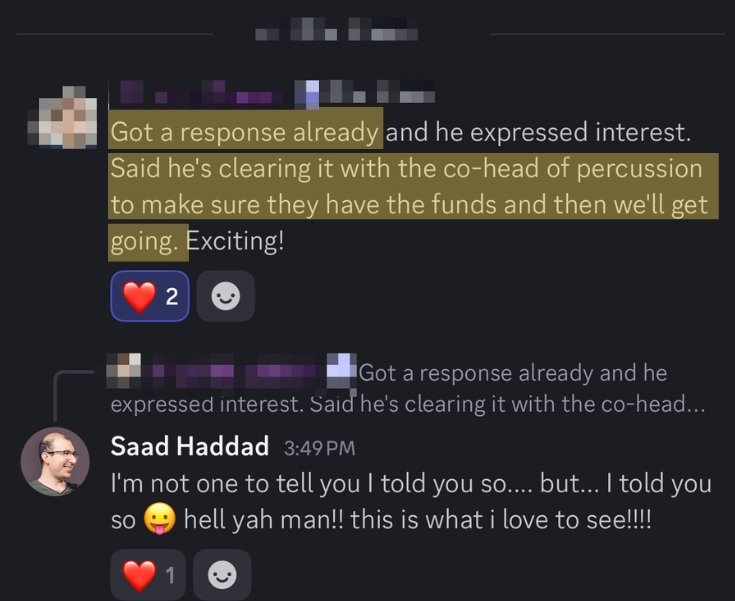
Discord message: got a response already and he expressed interest, and is checking the funding with the co-head of percussion
Luke: a reply the same day, from a player who is now checking the funding with his department.
Hour 3

Your seeds, live

I'll pick emails from the form and critique them live, explaining why each one got the answer it did, or no answer at all.

Then we'll fix them together, and you'll rework your own email alongside me.

Before we finish, you'll send it to a real musician during the workshop, so you leave with a seed already planted.

I can't get to every email, but everyone will learn from the examples.

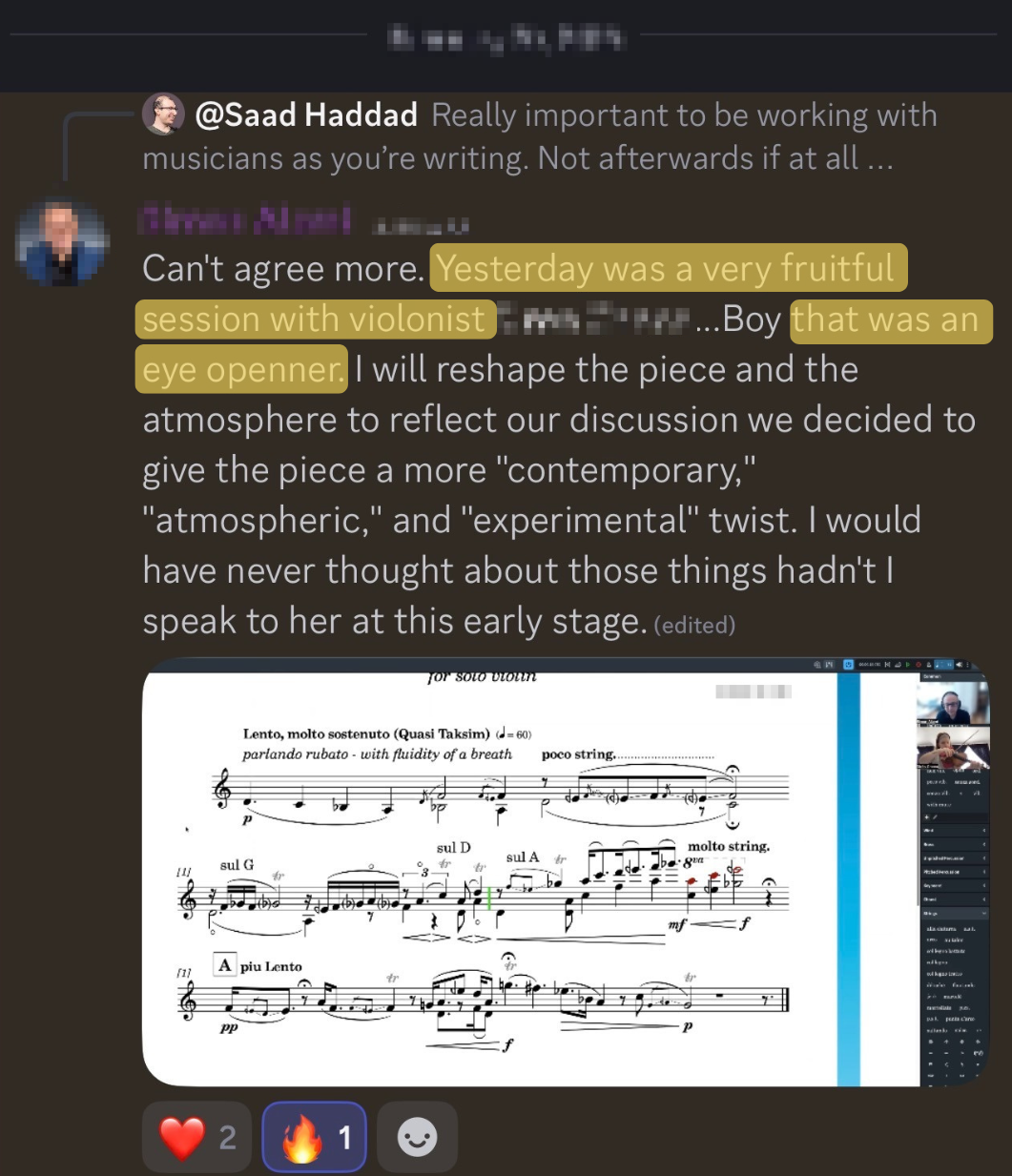
Discord message: a very fruitful session with a violinist while writing changed the direction of the piece
Simon: an early session with a violinist reshaped the piece while it was still being written.
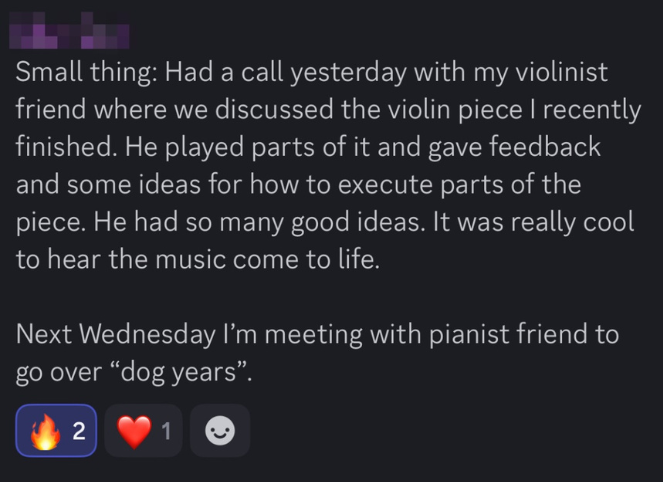
Discord message: a call with a violinist friend who played parts of the new piece and gave ideas
Nick: a violinist friend played through Nick’s new piece on a call and offered ideas.

Where this fits

Step one of the Performer Pathway™

Seed to Stage™ is the first step of the Performer Pathway™, the system I teach composers in my mentorship. It has three phases, and each one is built on a different kind of trust with musicians.

Phase 1

Personal trust

You write for musicians you already know, often short gift pieces, and your first performances come from them.

This workshop
Phase 2

Musical trust

Players who have performed your music start recommending you, and gift pieces start turning into commissions.

Phase 3

Institutional trust

Ensembles and organizations commission you, and your network keeps growing on its own.

In three hours, we'll work on phase one, the step most composers get stuck on and the place where most of the composers I work with begin.

Seeds that grew

Three composers, three very different seeds

Andrew: three seeds, three yeses

Andrew had a long list of musicians from years of playing, but hadn't talked to most of them in a long time. Andrew sent two short emails to people he already knew, a violist and the director of a chamber music collective, asking whether they wanted to talk about working on something together.

Both answered within hours.

“It is hard to be the first to reach out, even with people that I have known for a while. But it's a really nice feeling to get this reply, and punctures some of the self doubt that is inevitably part of this process.”

Within a month a pianist friend said yes too, and the collective set a premiere date for a new wind quintet.
Stephen: back to composing, fifty years later

Stephen studied music theory and composition in college in the late 1960s, then spent decades teaching piano and playing jazz. When Stephen came back to composing, the first seed was a solo flute piece for a flutist in Boston.

“My flute piece was performed last Saturday. … Steve has arranged another performance for sometime in the Spring.”

Since then, Stephen was selected to present a piece at the Longy School of Music, and a pianist recorded his piano suite. That one premiere kept growing.

Theodore: a seed that took five months

After a symphony concert, Theodore talked with the double bass soloist, who said they'd look at anything he wrote for bass. Theodore sent one simple follow-up while the conversation was fresh, then short check-ins every couple of weeks.

“Yeah I had to be a bit of a pest and send short followup/checkin emails every couple weeks!”

Five months later they got on Zoom and read through Theodore’s music. The soloist asked for a harder version of the piece, and then for a new solo written for them. It took me six years of that kind of follow-up to get my LA Phil commission.

Three more first seeds

  • Bradley hadn't talked to a saxophonist friend in years. Bradley sent one short message, "Long time, I want to write for sax, do you still play are you interested no pressure," and the saxophonist said yes the same day.
  • Kane showed a cellist friend a solo cello piece that was still being written. The cellist agreed to record it, helped shape the part, and the piece ended up on a concert.
  • Tom walked into a college music office unannounced, talked with the staff for half an hour, and followed up by email. One of the players Tom met there commissioned a piece for erhu and pipa.

More seeds that grew

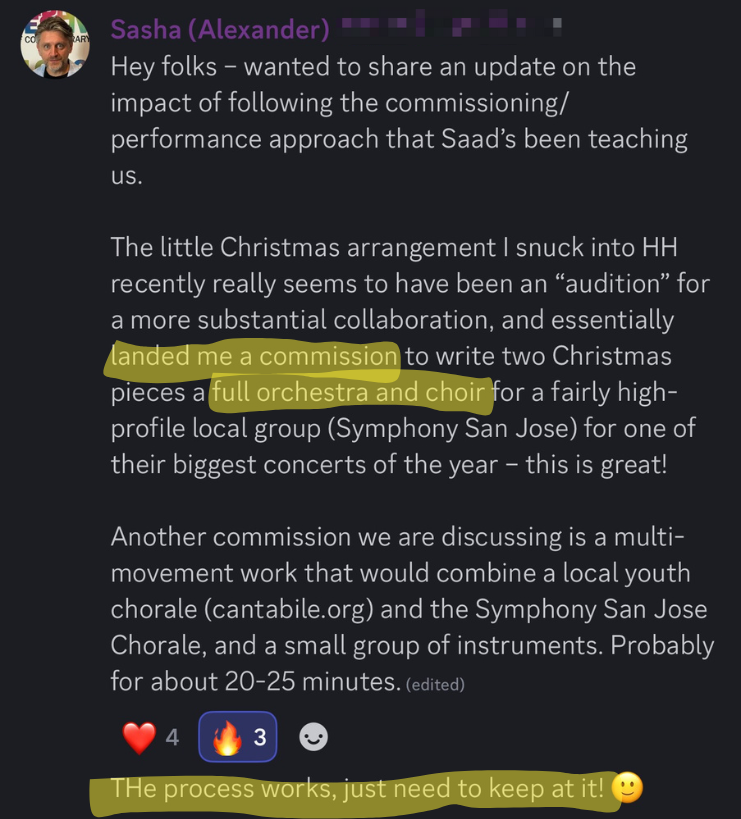
Discord message: a short Christmas arrangement led to a commission for full orchestra and choir; the process works, just need to keep at it
Sasha: a short Christmas arrangement became a commission for orchestra and choir.
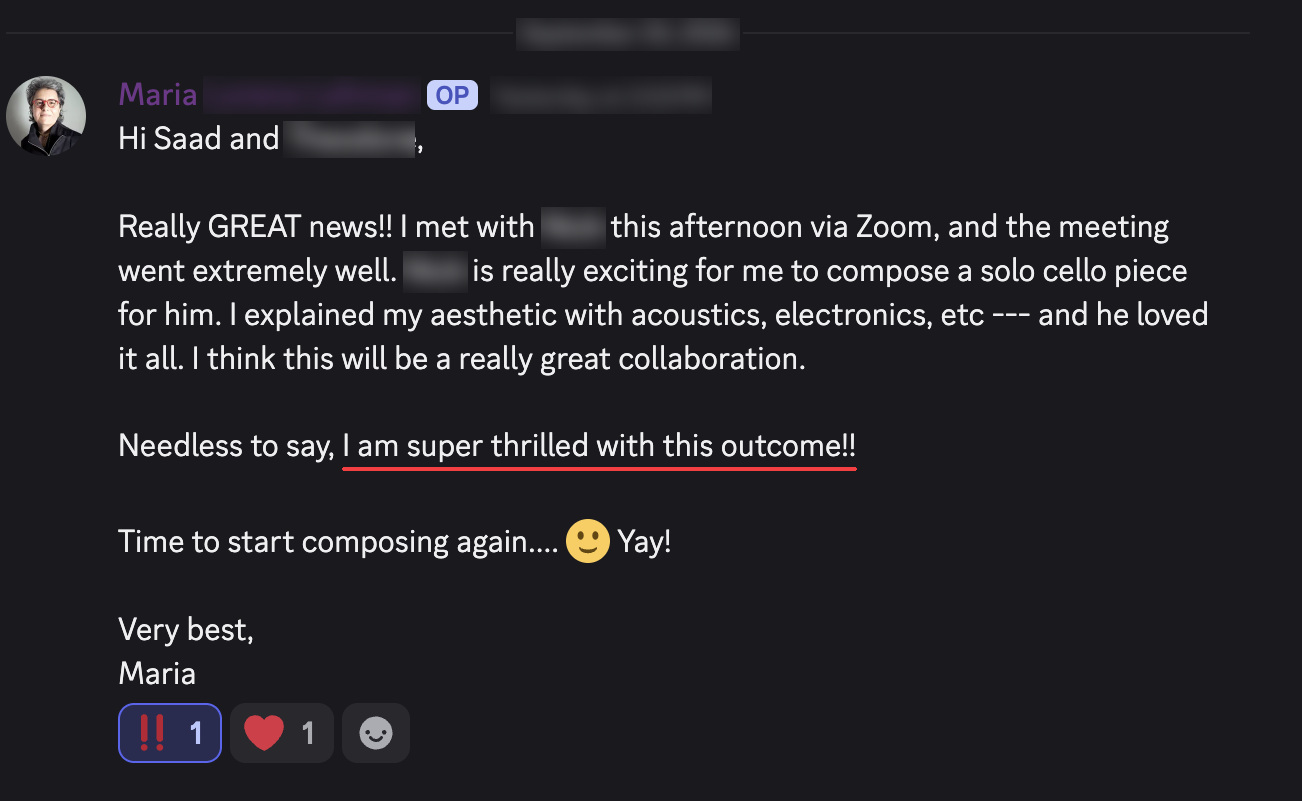
Discord message: a Zoom meeting with a cellist went extremely well, and he is excited for a new solo cello piece
Maria: one Zoom call, and a cellist is excited about a new solo piece from Maria.
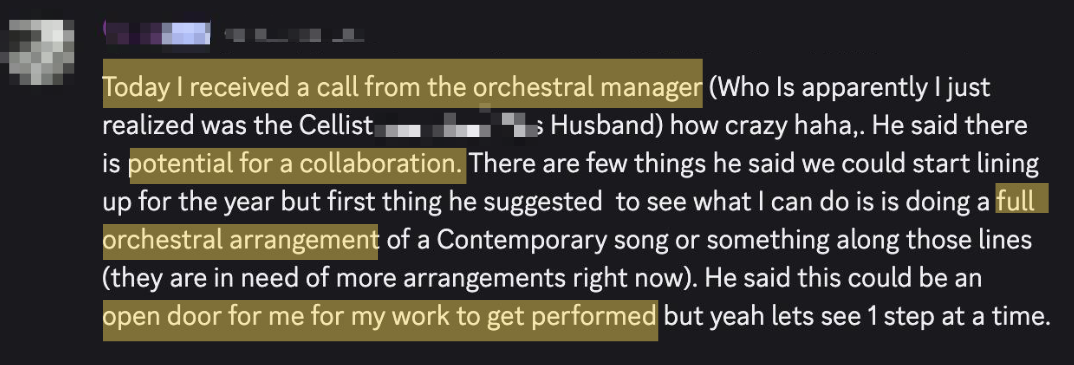
Discord message: a call from an orchestral manager about a possible collaboration
Cass: an orchestral manager called Cass about lining up a collaboration.

These results come from composers who have studied with me in my mentorship, not from a three-hour workshop, and they aren't guaranteed. They show what can happen once you start planting seeds.

Everything you get

Everything you get for $97

The live workshop

Three hours on Zoom with me, working through real outreach messages and the decisions behind them.

3 hours

Lifetime recording

Watch it again before you send your next message.

Forever

Live email critique

During the workshop, send me an outreach email you've already sent, and I'll critique a selection of them live.

Live

Fix it and send it, live

Rework your email with me and send it to a musician before the workshop ends.

Hour 3

Bonus 1: The Seed List™

A short worksheet for listing every player you know and choosing your first three seeds.

Bonus

Bonus 2: Follow-up message templates

What to send when a player hasn't answered, after a yes, and after the performance.

Bonus

Bonus 3: The monthly opportunities list

My list of calls for scores, competitions and residencies, updated every month.

Bonus
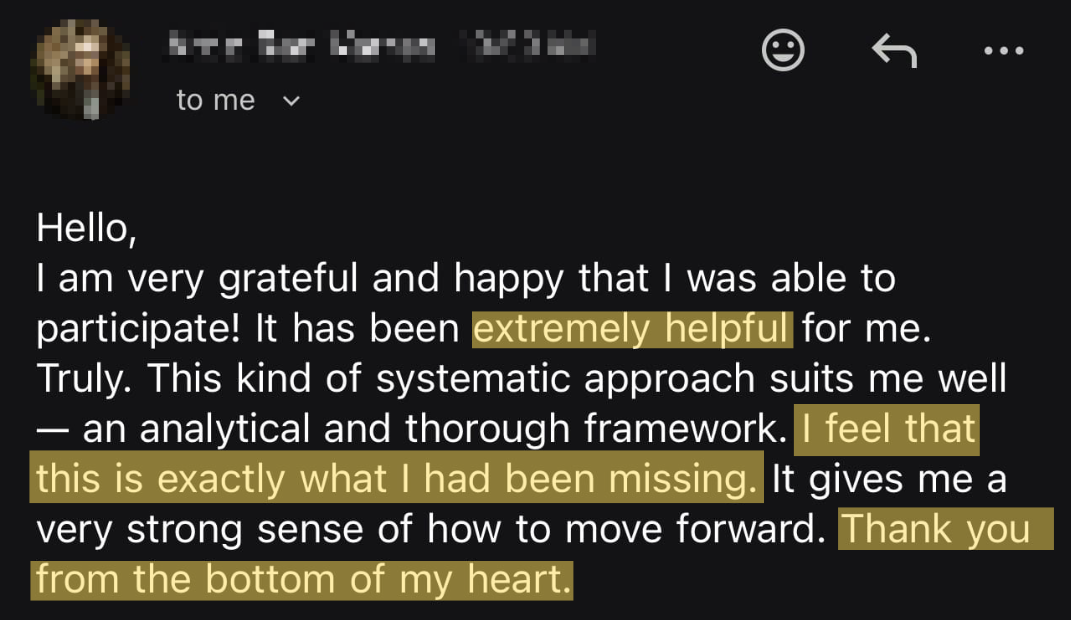
Email to Saad: this kind of systematic approach is exactly what I had been missing
From a composer’s note after working with me.

When it's happening

Sunday, [DATE]

Investment: $97 USD

Many composers spend more than this on two or three contest entry fees, for the chance at one performance chosen by someone else. This workshop is about the seeds you can plant yourself, with the musicians you already know.

Can't attend live? The lifetime recording is included.

Not right for you? Ask for a refund within seven days.

Questions

A few common questions

I don't know any performers. Is this for me?

Yes. Most composers who say this know more musicians than they think: friends from school, people from church or community groups, players they met once at a concert. The first hour is about finding them, and about where to meet new players when your list really is short.

I've emailed ensembles before and nobody answered.

That's one of the most common things I hear. An unanswered email usually has a fixable reason: it went to people who didn't know you yet, it asked for too much too soon, or nobody followed up. We'll work on all three, and on what to do next.

How long does it take for a seed to turn into a performance?

It varies a lot. Some of the composers on this page got an answer within hours, one waited through five months of short check-ins, and my LA Phil commission took six years of that kind of follow-up. That's why we plant a lot of seeds instead of waiting on one.

Is this the same as your mentorship?

No. This workshop is the first step of the Performer Pathway™, the system I teach in my mentorship. The mentorship is ongoing one-on-one work on your music and your career through all three phases. This workshop is three hours on the first one: getting musicians to say yes.

I don't have a music degree. Is this for me?

Yes. Musicians say yes to music they want to play and to people they enjoy working with. Many of the composers I work with write alongside other careers, and their first performances came from asking, not from a diploma.

I've been composing for years. Will this be too basic?

If your music is good and still isn't getting played, I designed this for you. We won't spend time on notation software or theory. We'll work on who you ask, how you ask and what you send.

My pieces have only been heard as MIDI. Do I need a live recording first?

No. Many of the composers I work with start with nothing but MIDI mockups. In hour two I'll show you when a mockup helps and when to send the score alone.

I work full time. Will I have time to do this?

Yes. Many of the composers on this page have full-time jobs, from a school band director to an airline pilot. Outreach takes a few messages a week, and the fewer hours you have, the more each message has to count.

Will you review my email?

Send it through the form I share at the start of the workshop. I'll pick a selection to critique live. I can't promise every email gets reviewed, but every critique applies to your own emails too.

What if I can't attend live?

You get the recording for life, so you can watch every critique and fix your own emails afterward. Sending emails for critique and sending your own message to a musician happen live, so join live if you can.

What if it's not right for me?

Ask for a refund within seven days and you'll get your money back, no questions asked.

Almost there

Save your seat

Use the form below to save your seat

Step 1: Your details

Step 2: Payment

Card

The secure Square card form appears here on the live page.

ItemPrice
Seed to Stage™ live workshop$97
Total$97.00 USD

VisaMastercardAmerican ExpressDiscover

Payment is processed securely by Square. Lifetime recording included. 7-day refund. By buying, you agree to the terms and refund policy.

Live 3-hour workshop

Sunday, [DATE]

  • Los Angeles[TIME] PT
  • New York[TIME] ET
  • London[TIME] GMT
  • Central Europe[TIME] CET
  • Sydney[TIME] AEDT

Can't make it live? The lifetime recording is included.

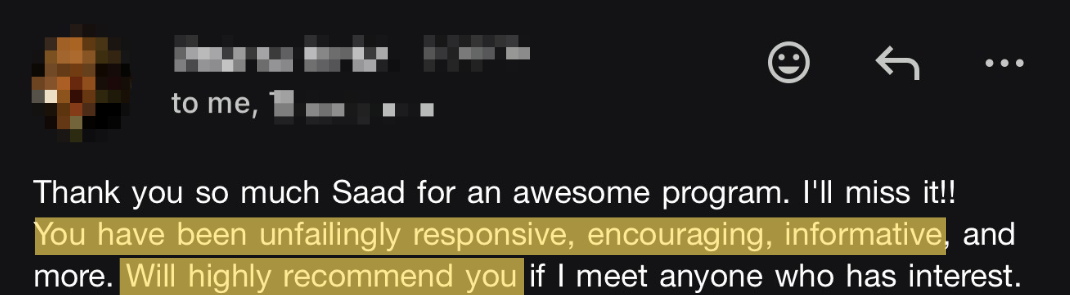
Email to Saad: thank you so much for an awesome program; unfailingly responsive, encouraging and informative
From a composer’s note at the end of my mentorship.

One last thing

The players are already out there

There will always be ensembles that don't answer, contests you don't win and players who are too busy this season.

You can't control which seeds grow, but you can plant enough of them that some of them will.

That's what I want to teach you in Seed to Stage™. Join me on Sunday, [DATE], live on Zoom, for $97.

About Saad

Saad Haddad

I help composers get their music performed again and again.

After 10 years of studying composition and $200,000 in training, I earned my master’s degree from Juilliard, but no one taught me how to get my music performed.

I won some contests, but they usually led to one performance after months of waiting and hoping, so I started going straight to the musicians.

Since then, my music has been performed more than 200 times, including by 21 professional orchestras, and I’ve helped over 100 composers get their music performed more reliably.

My music has been performed by

Your music can stay in the folder,

or you can take it

From seed to stage.

Save my seat

Sunday, [DATE] · Live on Zoom · $97 USD

Saad Haddad